The following is a brief “Explainer” I wrote recently, part of my work with colleagues to defend fiscal sponsorship from Trump-era attacks in Congress, Treasury and the IRS. I strongly believe the term “fiscal sponsorship” shouldn’t be legally defined. It should remain a cultural term for the various ways older or larger nonprofits can help newer or smaller projects access tax-deductible donations and grants. But each model is built on long-standing legal precedents — that’s where any efforts to improve definitions should be directed.
In the decades before 1990, there was no generally accepted name (and a lot of incorrect names, such as fiscal agent, conduit, pass-through or intermediary) for the legitimate ways a larger, older 501(c)(3) organization could help a smaller, newer charitable project get started with access to tax-deductible funds.
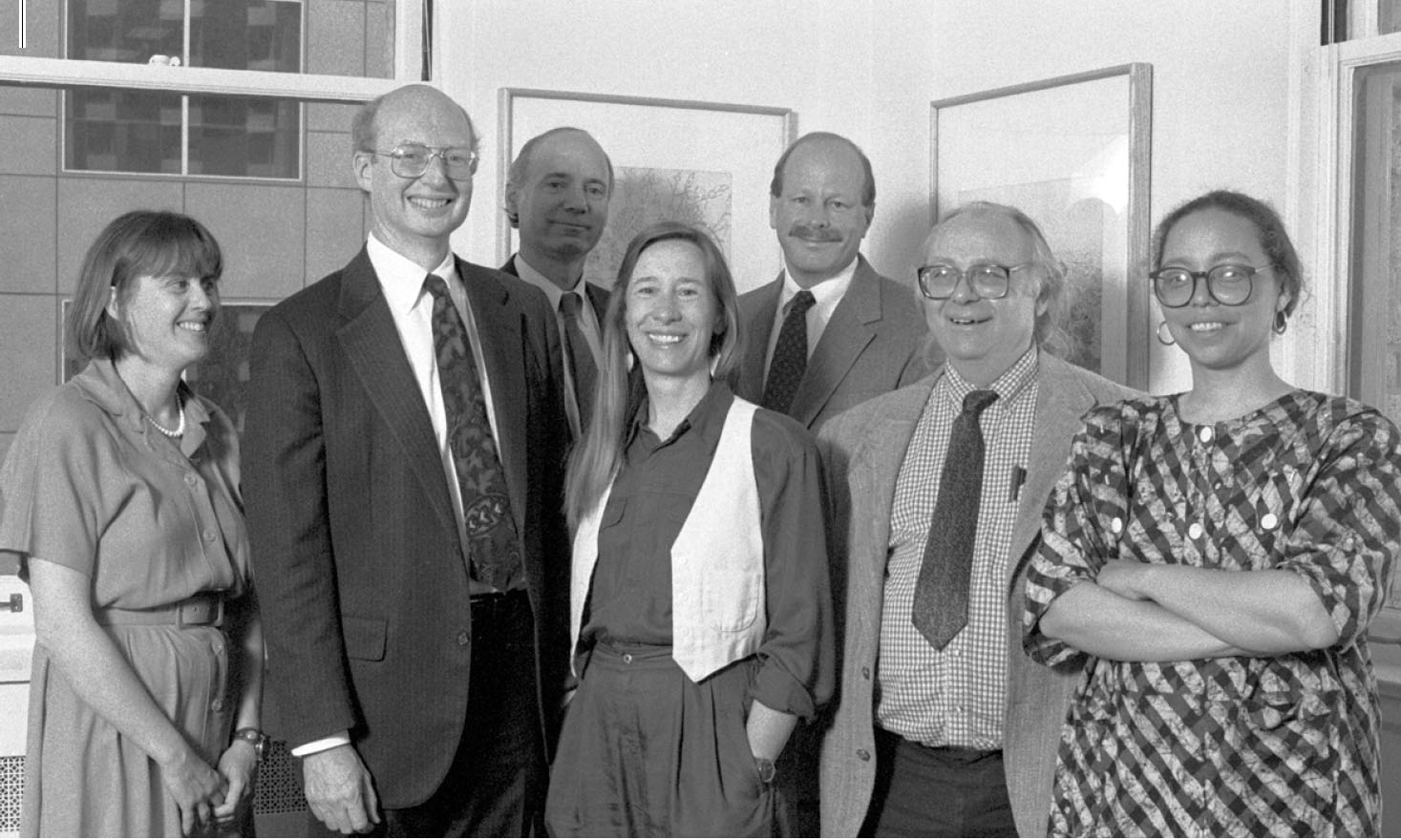
After John Edie wrote the 1989 Council on Foundations article, “Fiscal Agents: A Trap for the Unwary,” a group of us assembled to set things right, using our experiences working in local community services, arts and culture, independent film, and private and community foundations. We chose the term “fiscal sponsorship” and engaged Silk, Adler & Colvin to write a handbook to guide 501(c)(3)s in using the best legal models approved by the IRS.
Model A, the direct or comprehensive form, long employed by universities, medical institutions and community hubs, follows the pattern of in-house departments, clinics, centers and other programs that seek to benefit from the grants and donations directed to them, subject to a range of administrative charges. Treas. Reg. 53.4945-4(a)(4)(i), (ii) and (iv).
Model B is a simple way to engage an independent contractor, such as an artist, composer, convention planner or other professional, to produce a charitable work or event, with special attention to intellectual property rights and tax rules, e.g., IRS Publication 1779 and IRS GCM 39883.
In Model C, the pre-approved grant to a project that does not have its own 501(c)(3) status, (aka re-granting), the bedrock principle is that the sponsor must maintain “discretion and control” over how the grantee uses funds it receives. The sponsor must approve a grant proposal before solicitation and obtain timely reports on the use of granted funds. Widely used in arts and culture, this model supports new charities waiting for IRS recognition and those involved in foreign grant-making. In fact, the leading authority, Rev. Rul. 66-79, emerged from IRS rulings issued to United Jewish Appeal in the early 1960s, which raised millions from U.S. donors to build up Israel’s educational system. See also Rev. Rul. 68-489.
Model D, the group exemption, is used by a range of 501(c)(3)s — churches, congregations, educational and health organizations, and other national and state bodies — to confer charitable tax status on the local units, chapters and clubs that are subject to their supervision and control. Rev. Proc 80-27, recently modified by Rev. Proc. 2026-5.
Model L is a new form of fiscal sponsorship recognized under IRS Notice 2012-52 and IRS General Information Letter 2010-0052. It allows a 501(c)(3) to go beyond Model A to act as the single member of a limited liability company, holding assets or conducting an activity that shares the charitable exemption of its sole member while shielding it from liabilities. It has been used for projects as diverse as Black Rock City LLC, solely owned by the 501(c)(3) Burning Man Project, and President Trump’s recent Freedom250 operating as a subsidiary of the National Park Foundation.
Lastly,
Model F is simply a paid form of technical assistance management service that one 501(c)(3) provides, below cost, to another 501(c)(3) for purposes of efficiency, recognized by GCM 38447, a series of Revenue Rulings issued from 1969 to 1978, and Airlie Foundation v. IRS, 283 F. Supp. 2d (D.D.C. 2003).
Author, Fiscal Sponsorship: 6 Ways to Do It Right, Study Center Press, 1993, 2005, with Stephanie Petit, 2019
Photo: The group that convened in 1993 to “set things right” about fiscal sponsorship included, from left, Frances Phillips, executive director of Intersection for the Arts and director of the Creative Work Fund; Greg Colvin, 6 Ways author; John Kreidler, San Francisco Foundation program executive and Cultural Initiatives Silicon Valley executive director; Julie Mackaman, Film Arts Foundation co-director and development director; Tom Layton, Gerbode Foundation executive director; Geoff Link, San Francisco Study Center executive director; and Alma Robinson, California Lawyers for the Arts executive director.